
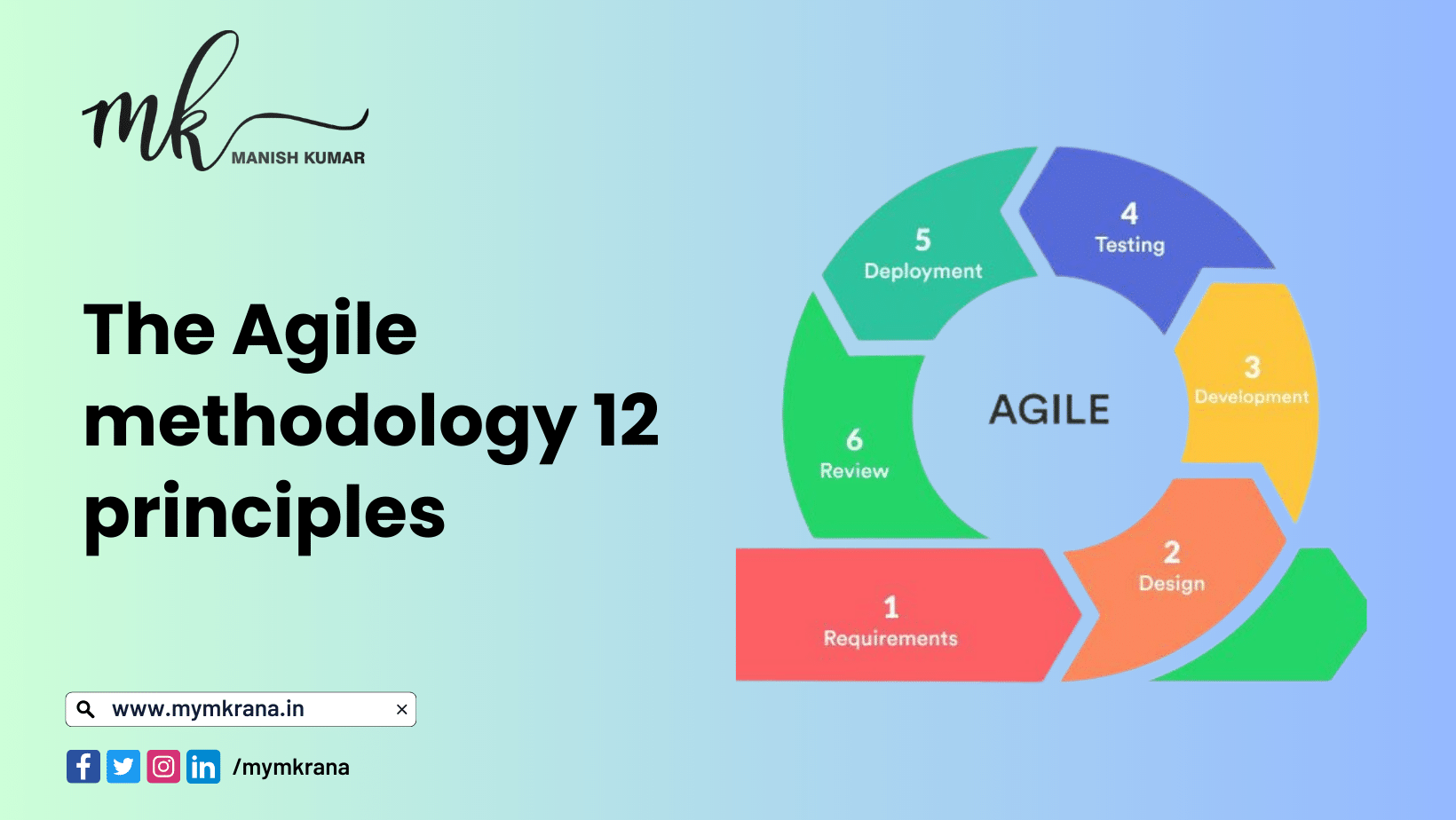
The Agile methodology is based on 12 principles that guide its implementation.
237
Agile methodology is a project management approach that emphasizes flexibility, collaboration, and customer satisfaction. It is an iterative and incremental approach that focuses on delivering working software or products in short timeframes, typically ranging from one to four weeks.
The Agile methodology is based on 12 principles that guide its implementation. These principles, as stated in the Agile Manifesto, are:
- Customer satisfaction through early and continuous delivery of valuable software.
- Embrace changing requirements, even in late development.
- Deliver working software frequently, with a preference for shorter timescales.
- Collaboration between business stakeholders and developers throughout the project.
- Build projects around motivated individuals and give them the support and trust they need.
- Use face-to-face communication as much as possible.
- Working software is the primary measure of progress.
- Sustainable development, where development pace can be maintained indefinitely.
- Technical excellence and good design enhance agility.
- Simplicity, the art of maximizing the amount of work not done, is essential.
- Self-organizing teams encourage great architectures, requirements, and designs.
- Regularly reflect on how to become more effective and adjust behavior accordingly.
These principles emphasize the importance of customer satisfaction, collaboration, flexibility, and continuous improvement. By following these principles, Agile teams can be more efficient, deliver higher quality software or products, and better respond to changing requirements or business needs.
